
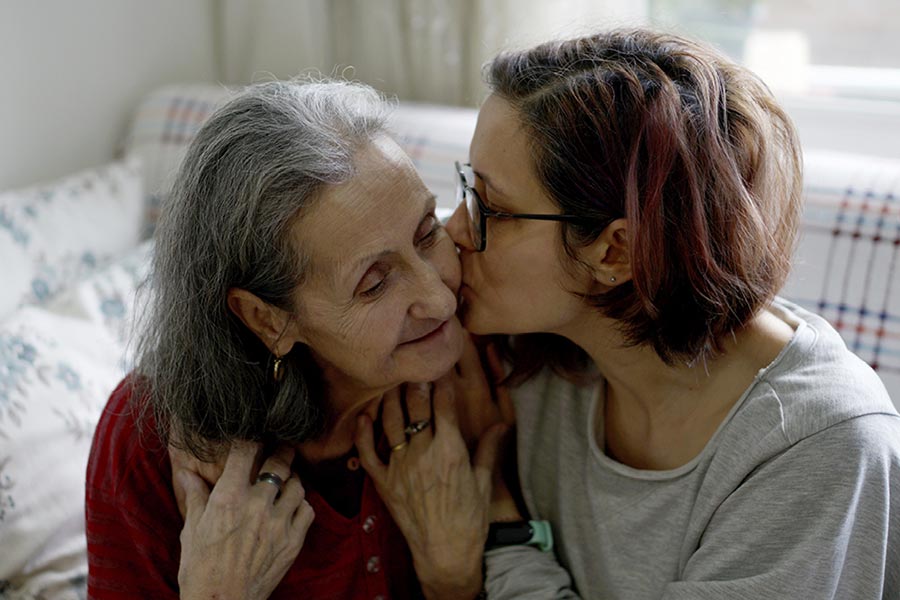
Carol’s story*
Carol had two adult children, Darren and Leanne. Darren was a troubled teenager who had a fractious relationship with his mother and sister. In his teens he distanced himself from his family and as a grown-up he cut off contact with Carol altogether.
Carol made attempts to repair the relationship but Darren moved interstate and did not respond. Darren had no meaningful involvement in Carol’s life for several years, but Carol remained close to Leanne.
In her late 50s, Carol was diagnosed with early onset dementia. As Carol’s condition progressed, Leanne became her mother’s carer and they continued their loving relationship. Leanne was focused on helping her mum navigate day-to-day life and didn’t raise with Carol what might happen in the future.
Without legal capacity, Carol can’t make a Will
Carol, meanwhile, was struggling with declining decision-making capabilities and by the time she considered making a Will, she no longer had legal capacity to do so.
When Carol died without a valid Will, her estate was distributed under the terms of Queensland’s intestacy law. Despite his long absence and lack of involvement in Carol’s life, Darren was entitled to an equal share of Carol’s estate. He received 50 per cent of Carol’s assets, while Leanne, who’d devoted years to caring for her mother, received the remaining 50 per cent.
Why Queensland law decides who inherits
If you lose capacity to make a Will before putting your wishes in place, the Succession Act 1981 (Qld) will determine how your estate is divided. This often results in a distribution of equal shares, regardless of contribution, care or relationship.
If you want particular loved ones to benefit from your estate but haven’t made a Will, your estate may be shared in a way that doesn’t reflect your wishes. A Will isn’t something to think about later in life.
Find out more about why a valid Will is vital
* This is a fictionalised case study created for the purpose of illustrating succession law concepts. Any resemblance to an individual, living or deceased, is purely coincidental.